
By Pastor Frank Wulf
Echo Park United Methodist Church
La Plaza United Methodist Church
1 Kings 18:17-18
When Ahab saw Elijah, Ahab said to him, “Is it you, you troubler of Israel?” Elijah answered, “I have not troubled Israel, but you have, and your father’s house, because you have forsaken the commandments of the Lord and followed the Baals.
A friend of mine ends most conversations by encouraging people to stay in ‘good trouble.’
‘Good trouble’ is a strange phrase. We normally associate trouble with things that are going wrong or people who are causing us problems. We do our best to avoid trouble because it typically hurts us, annoys us, delays us, or requires us to use time, money, and energy that we’d rather save for something else.
That’s how king Ahab was using the term when he accused Elijah of being a “troubler of Israel.” He blamed Elijah for causing a disastrous three-year drought that had devastated Israel’s economy and caused untold suffering for Israel’s people. Crops had failed, animals had died, trade had dwindled, and the people had been forced to go thirsty and hungry. The drought had also caused a great deal of trouble for Ahab himself, calling into question the very legitimacy of his reign. It was the king’s job to intercede with the gods to bring prosperity and security to the land. So, if the gods were not responding to Ahab’s requests to end the drought, then maybe – just maybe – he wasn’t the right person to be king.
For Elijah, that was the very point that needed to be made. Ahab was not the right person to be king! He had abandoned the God of Israel and embraced the gods of the Canaanites. In their name, he had assumed the mantle of absolute monarch and engaged in the systematic repression of the people—all of this for the purpose of enriching himself and advancing his own personal interests. He would even pervert the nation’s judicial system to execute a man on false charges of apostasy so that he could steal the man’s vineyard and plant a vegetable garden for himself. (1 Kings 21:1-16)
While it’s true that Elijah was the one who summoned the drought that troubled Israel and its king, the scriptures are adamant that he did not do so for arbitrary or malicious reasons. He stopped the rain in the name of Israel’s God for the purpose of reestablishing a social, political, and religious order grounded in the divine mandate to do justice, love kindness, and care for the lowest and the least. Elijah was indeed a troubler of Israel, just as Ahab claimed, but the trouble he caused was ‘good trouble’—trouble that had the potential of transforming the nation of Israel for the better.
It’s sometimes assumed that faith must steer clear of the political turmoil that roils society in order to focus instead on people’s spiritual health and the eternal disposition of their souls. Surely, there is wisdom in avoiding the bitterness, deception, nastiness, and corruption that are too often embedded in the political realities of our world. And yet, as the prophets of ancient Israel knew well, the give and take of politics held powerful sway over the lives of common people. They knew that they could not remain neutral in the face of an unjust and violent politics of suppression that destroyed people’s bodies and souls. The God of Israel demanded justice and equity for all of God’s people—even immigrants (Leviticus 19:33-34)—as a condition of Israel’s continued occupancy of the land: “Justice, and only justice, you shall pursue, so that you may live and occupy the land that the Lord your God is giving you.” (Deuteronomy 16:20) Israel’s prophets could not shy away from the divine calling to speak and act on God’s behalf to demand justice and equity from the political, social, economic, and religious systems of their day. ‘Good trouble’ was an essential part of the job description.
It’s also an essential part of our job description as disciples of Jesus Christ.
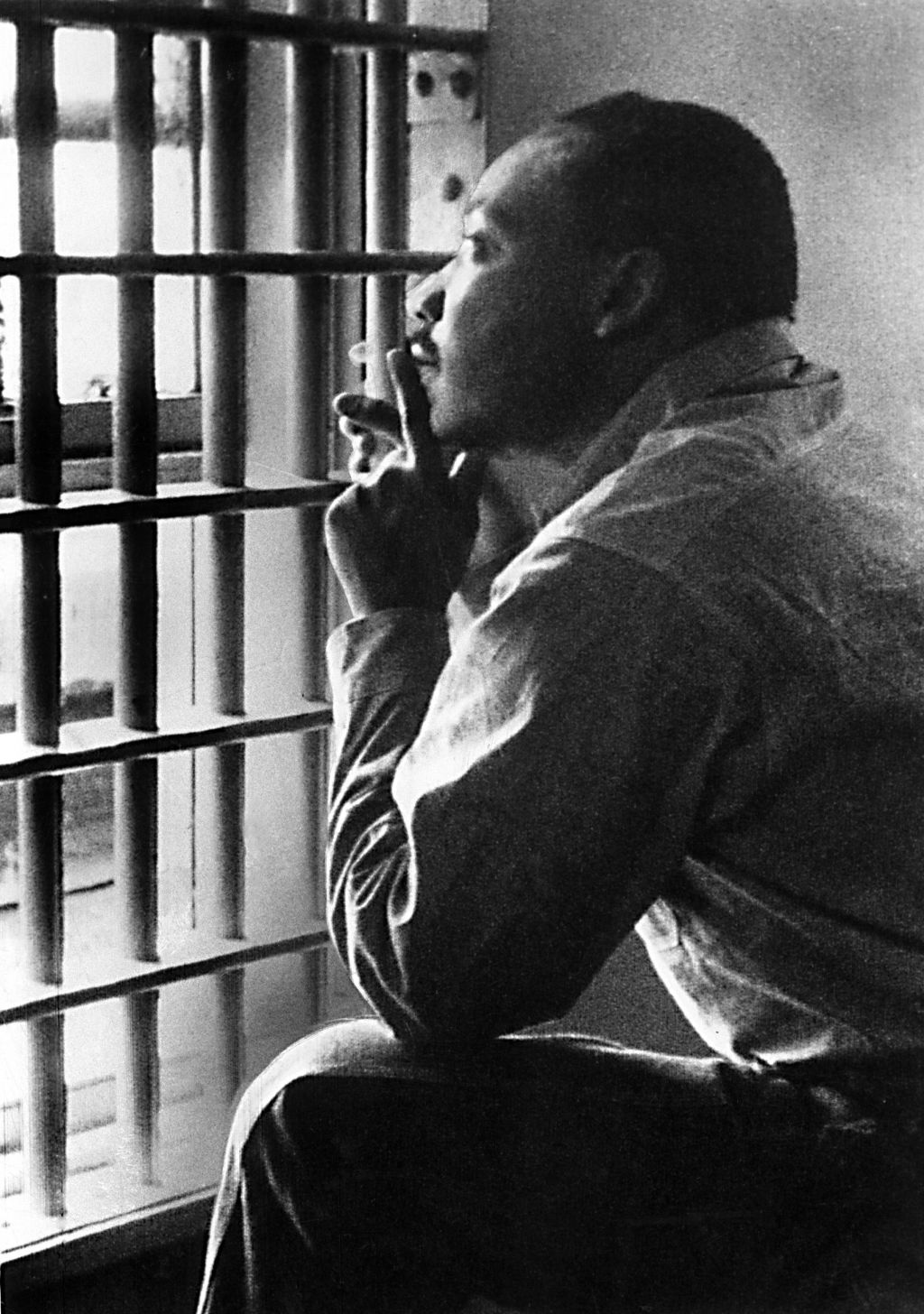
The American prophet, Martin Luther King, Jr., discusses the crucial importance of ‘good trouble’ in his 1963 Letter from a Birmingham Jail. In it, he harshly critiques those who are “more devoted to ‘order’ than to justice,” writing:
I must confess that over the past few years I have been gravely disappointed with the white moderate. I have almost reached the regrettable conclusion that the Negro’s great stumbling block in his stride toward freedom is not the White Citizen’s Counciler or the Ku Klux Klanner, but the white moderate, who is more devoted to “order” than to justice; who prefers a negative peace which is the absence of tension to a positive peace which is the presence of justice; who constantly says: “I agree with you in the goal you seek, but I cannot agree with your methods of direct action”; who paternalistically believes he can set the timetable for another man’s freedom; who lives by a mythical concept of time and who constantly advises the Negro to wait for a “more convenient season.” Shallow understanding from people of good will is more frustrating than absolute misunderstanding from people of ill will. Lukewarm acceptance is much more bewildering than outright rejection.
King refuses to compromise on the absolute necessity of engaging in ‘good trouble’ in the struggle for African American civil rights. “My friends,” he writes, “I must say to you that we have not made a single gain in civil rights without determined legal and nonviolent pressure. Lamentably, it is an historical fact that privileged groups seldom give up their privileges voluntarily.” Overcoming injustice requires courage, persistence, determination, and audacity. It does not require politeness; it requires ‘good trouble.’
There are, of course, risks to ‘good trouble.’ Elijah had to flee Israel in the face of royal threats to have him executed. King was murdered by the bullet of a racist assassin. ‘Good troublers’ will always confront slander and vilification, cursing and threats of violence, brutalization and sometimes even murder. Yet they continue their work in spite of it all. They know to the very depths of their souls that God’s justice and love must always triumph over the world’s evil, hatred and fear. So, they continue to cause ‘good trouble,’ knowing that their calling to care for all God’s people is worth the risk. It is, in fact, the only thing that is.
God of all creation, may your reign come, your will be done on earth as it is in heaven. Help us to hear you, and strengthen us to follow your call to cause ‘good trouble’ on this earth so that all your people, even the lowest and the least, may come to know the expansiveness of your love and fullness of your justice. Amen.
May God bless you all!
Frank
++++++++++++
 ECHO PARK UNITED METHODIST CHURCH